
Walking in the cold: is it good for you, and does it burn more?
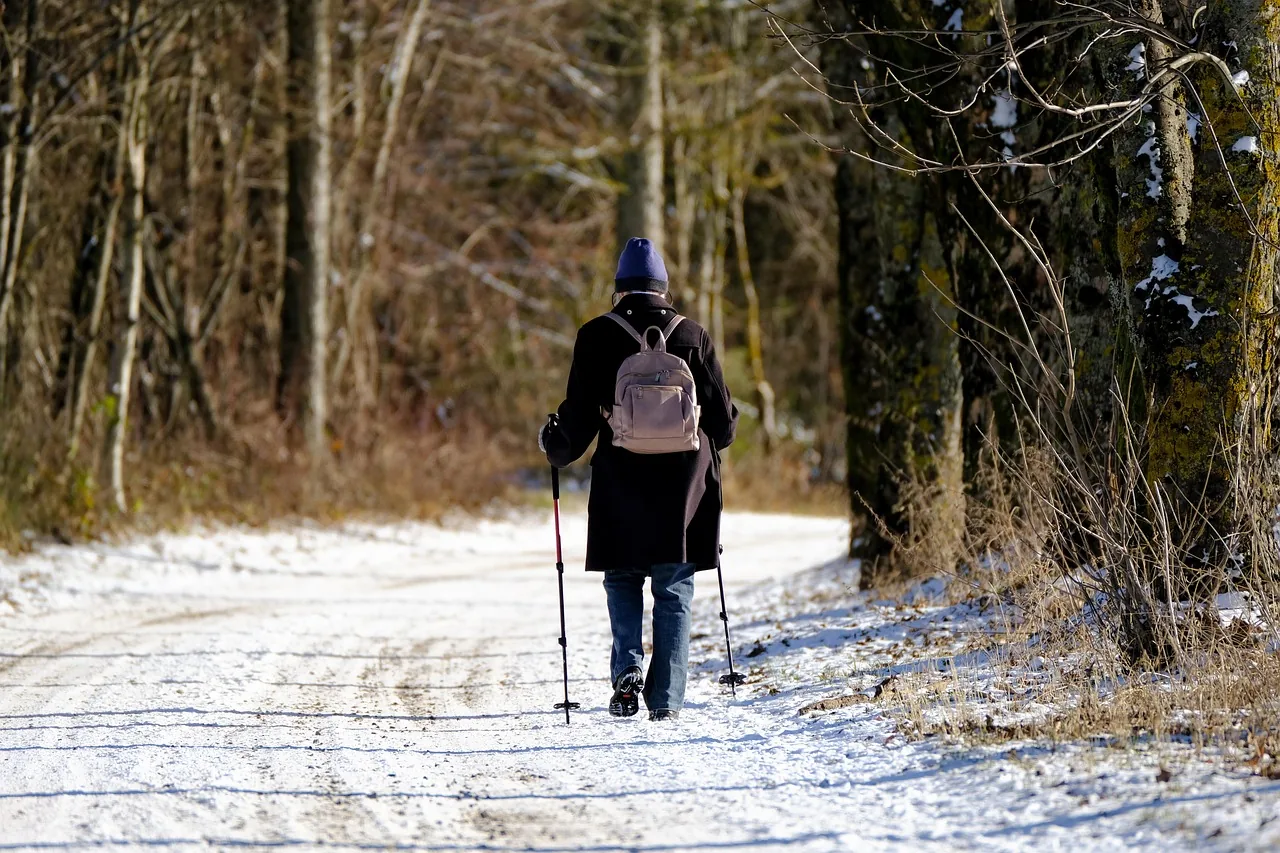
A walk in winter counts the same as a walk in summer: the same steps, the same distance, the same habit kept going through the darkest months of the year. What changes is the ground underfoot, the light, and how you dress for it.
The short answer
For most people, yes, walking in the cold is as good for you as walking any other time, as long as you dress for it and watch your footing. Snow does make walking harder work, and the deeper you sink, the more it takes. People with heart conditions should be more careful in cold weather and heavy snow, and check with their doctor about winter exercise.
Does walking in the cold burn more calories?
Two things can make a winter walk cost more energy than the same walk in summer, and they are not equally well understood.
The ground. This is the big one, and it is well measured. Researchers who model the energy cost of walking use a “terrain coefficient”: how much harder a surface is than a paved road. A 2019 review by US Army researchers in Applied Ergonomics worked out new coefficients for snow, based on how far each step sinks. Even on snow you barely sink into, their model starts at about a quarter more effort than pavement, and the cost climbs steeply with every extra centimetre your foot goes down. Walking through soft, deep snow can take several times the effort of the same distance on a cleared path.
The cold air itself. This is the smaller and less certain part. Your body spends energy to keep warm, especially once you start to shiver, but in warm clothes on a brisk walk you may not need to. We found no solid figure for how much extra an ordinary winter walk in good clothing burns, so we don’t give one. If a fitness tracker shows a bigger number on a cold day, the snow or slush underfoot is the more likely reason.
Is walking in the cold good for you?
The benefits of walking don’t switch off in winter. Walking through the cold months keeps the habit going, and spring is easier when you haven’t stopped. The benefits of walking apply on a frosty morning as much as on a summer evening.
Cold weather does add strain for some people. The American Heart Association warns that walking through heavy, wet snow or snowdrifts can strain the heart, and that older people and those with heart disease are at special risk in the cold. If that is you, keep winter walks to cleared paths, go at an easy pace, and talk to your doctor about what is right for you.
How to dress for a winter walk
- Layers, which the American Heart Association recommends for keeping warm. A thin base layer, a warm middle layer and a wind- or waterproof outer layer let you take one off when you warm up and put it back on when you stop.
- Hat and gloves. Hands and ears get cold first.
- Shoes with grip. Soles with deep tread hold better on packed snow. For ice, slip-on cleats stretch over ordinary shoes (more in our gift guide).
- Something reflective. Winter walks often happen in the dark. The UK’s Highway Code advises wearing something light-coloured, bright or fluorescent in poor daylight and reflective materials after dark, which drivers using headlights can see up to three times as far away.
Staying safe on ice and in the dark
- Shorten your step on slippery ground and keep your weight over your feet.
- Stick to cleared, lit routes when it is icy or dark, even if they are less interesting.
- Know the signs of getting too cold. The American Heart Association lists lack of coordination, confusion, slowed reactions, shivering and sleepiness as symptoms of hypothermia. If you notice them in yourself or someone with you, get indoors and warm up.
- Tell someone where you are going if you walk alone in remote or snowy places.
When it’s too cold to go out
Some days the ice wins. Steps indoors count too: walking in place, laps of the house, or a walking pad keep the daily total moving until the paths clear.
A reason to walk today
Walking is easy to skip when it leads nowhere in particular. reTrek gives your walks a finish line: pick a famous route, like the Camino de Santiago or the Inca Trail, and every walk moves you further along it, with a short film about the place waiting at each milestone. The walk you would have skipped becomes the one that gets you to the next milestone.
Everest Base Camp is free. Get reTrek.