
What muscles does walking work? Legs, glutes and the incline effect
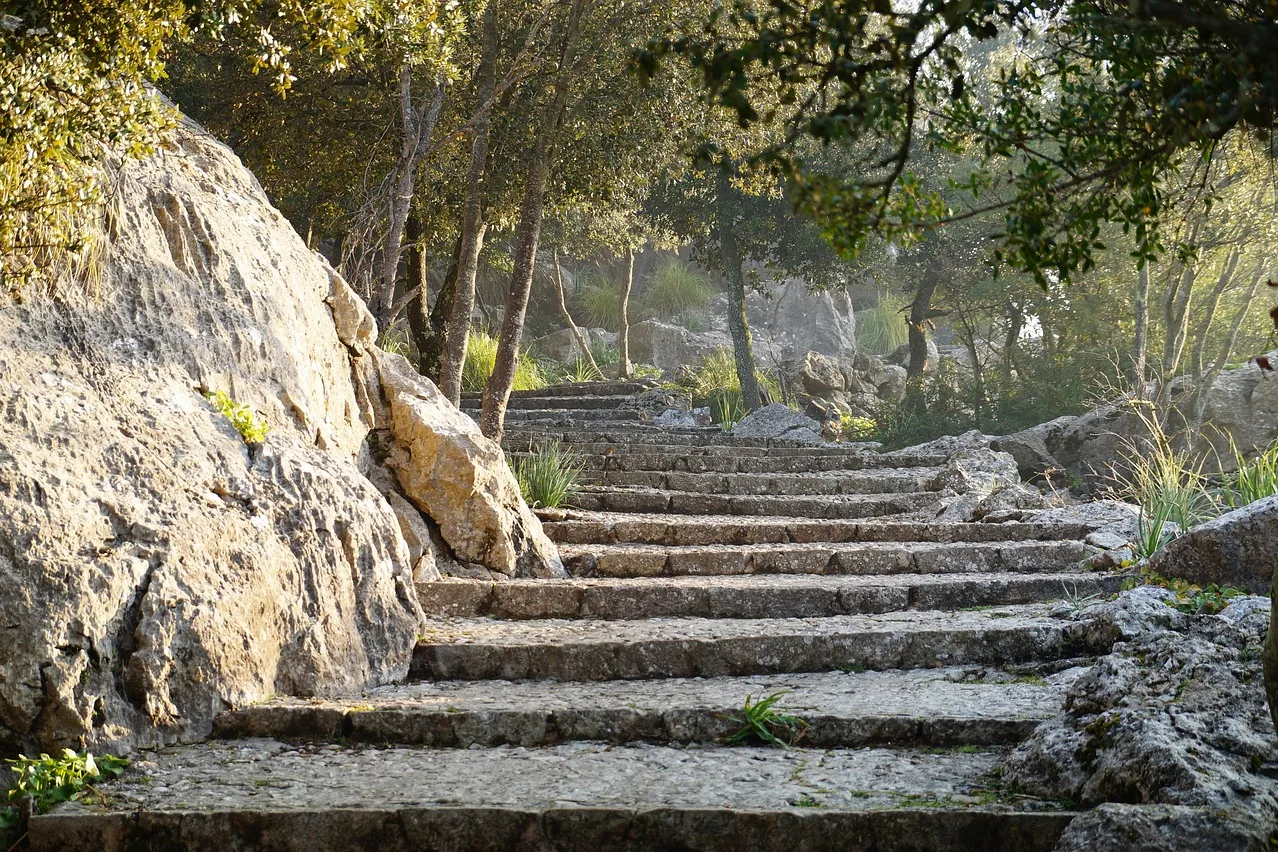
Every step uses most of the muscles in your legs and hips: some to push you forward, some to catch your weight as you land, some to swing the leg through. On flat ground none of them works very hard, which is why walking feels easy. Hills change that, and they change it most for the muscles people usually ask about: the glutes and the backs of the thighs.
The short answer
Walking works your calves, the front and back of your thighs, and your glutes, with your core keeping you upright. On flat ground the effort is light. Uphill, the work in the hips and thighs goes up sharply: in a 2012 study, walking up a steep slope raised glute activity by a reported 345% and hamstring activity by 635%. Walking keeps your legs working and helps you hold on to what you have, but it is aerobic exercise, and the guidelines count muscle strengthening separately.
The muscles walking uses
- Calves (gastrocnemius and soleus): push off the ground at the end of each step.
- Front of the thighs (quadriceps): straighten the knee and absorb the landing.
- Back of the thighs (hamstrings): swing the leg through and control it before your heel lands.
- Glutes (gluteus maximus): extend the hip, driving you forward, most of all uphill.
- Shins (tibialis anterior): lift your toes so they clear the ground.
- Core and hips: keep your trunk steady and your pelvis level as you shift from one leg to the other.
What hills do
The clearest measurements come from a 2012 study (Franz and Kram). Ten young adults walked on a treadmill at seven slopes and three speeds while sensors measured the activity of six leg muscles. Compared with walking on the flat, walking up a 9° slope, about a 16% incline, raised muscle activity like this:
| Muscle | Increase reported, uphill (9°) vs flat |
|---|---|
| Hamstrings (biceps femoris) | 635% |
| Inner front thigh (vastus medialis) | 366% |
| Glutes (gluteus maximus) | 345% |
| Calf (medial gastrocnemius) | 175% |
| Front thigh (rectus femoris) | 165% |
| Deep calf (soleus) | 136% |
These are the study’s own figures, with activity measured against walking on the flat. Whichever way you read them, the hip muscles (hamstrings and glutes) gained the most.
Walking downhill was different: only the front of the thighs worked harder (310% and 246% at the same slope), because they brake each step. The changes grew larger at faster speeds.
So if you want more from your glutes and the backs of your thighs on a walk, hills do it. On a treadmill, the incline setting does the same job.
Does walking tone your legs or build glutes?
Walking keeps your leg muscles working every day, and hills and stairs make them work much harder. But walking counts as aerobic activity. The US guidelines ask adults to do muscle-strengthening activities for all the major muscle groups on two or more days a week, on top of the aerobic minutes, and walking doesn’t cover that part. Exercises like squats, lunges, step-ups and glute bridges are what the guidelines mean. Our guide to whether walking is good exercise covers the rest of the picture.
How to work your legs harder on a walk
- Find hills, or raise the treadmill incline.
- Take the stairs. Stairs are a steep slope in short steps.
- Walk faster. In the same study, the extra work on slopes grew with speed.
- Add weight carefully: see rucking, walking with a weighted pack.
- Walk on soft ground like sand or grass, which takes more effort than pavement.
A goal for every walk
Walking is easy to skip when it leads nowhere in particular. reTrek gives your walks a finish line: pick a famous route, like the Camino de Santiago or the Inca Trail, and every walk moves you further along it, with a short film about the place waiting at each milestone. You stop looking for a spare moment to walk and start walking to reach the next milestone.
Everest Base Camp is free. Get reTrek.