
Inca Trail to Machu Picchu: how long it is, how high it goes, and how to walk it from home
Four days on a five-hundred-year-old stone road, over three Andean passes, to the Sun Gate above Machu Picchu. Short on paper, and every metre of it up or down.
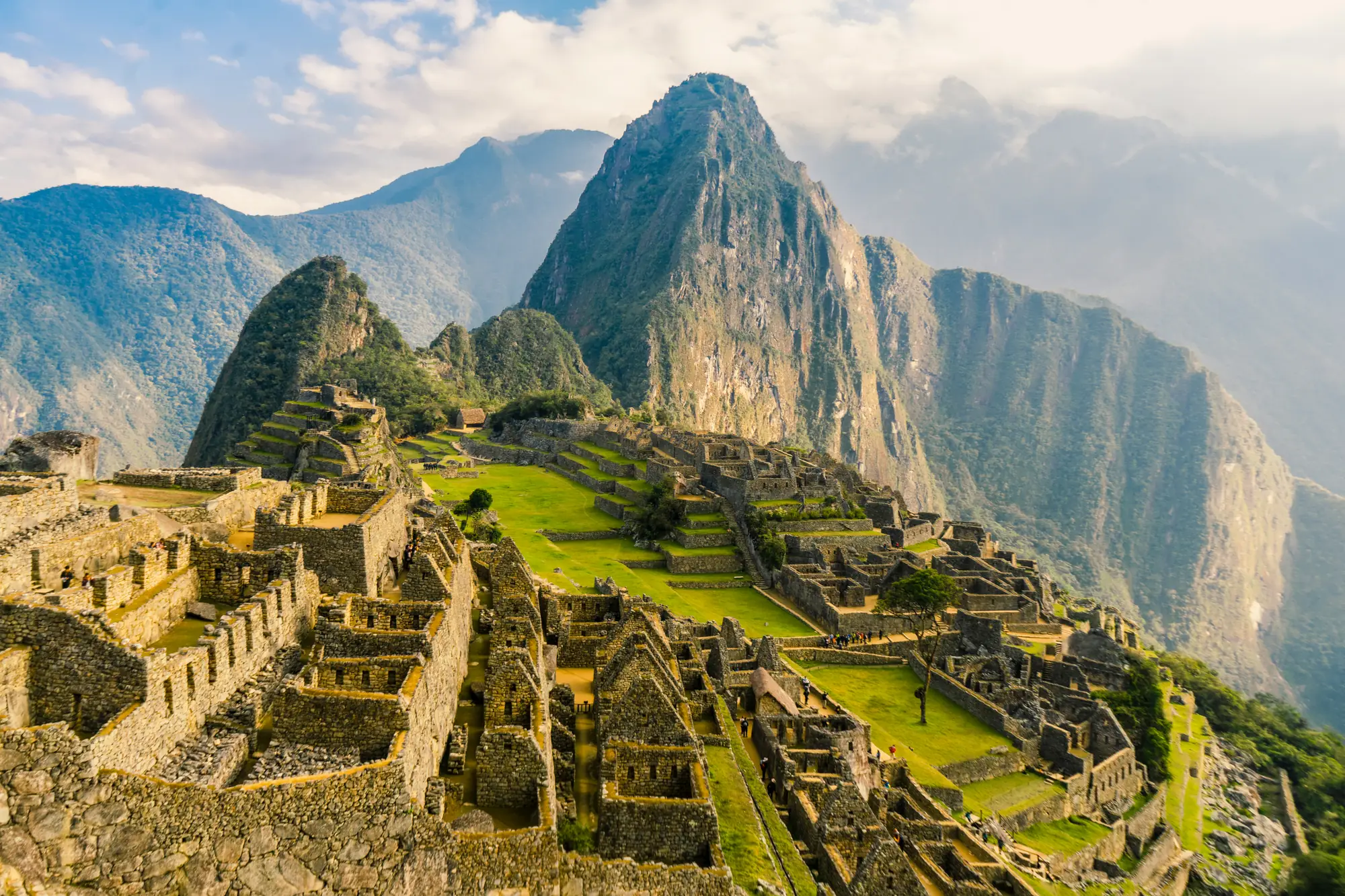
At a glance
- Distance
- 43 km · 27 miles
- In steps
- about 61,000
- Trekking days
- 4 days, 3 nights
- Route
- Km 82 (Piscacucho) to Machu Picchu
- Highest point
- 4,215 m · 13,829 ft
- Best season
- May to September, the dry season
How long is the Inca Trail?
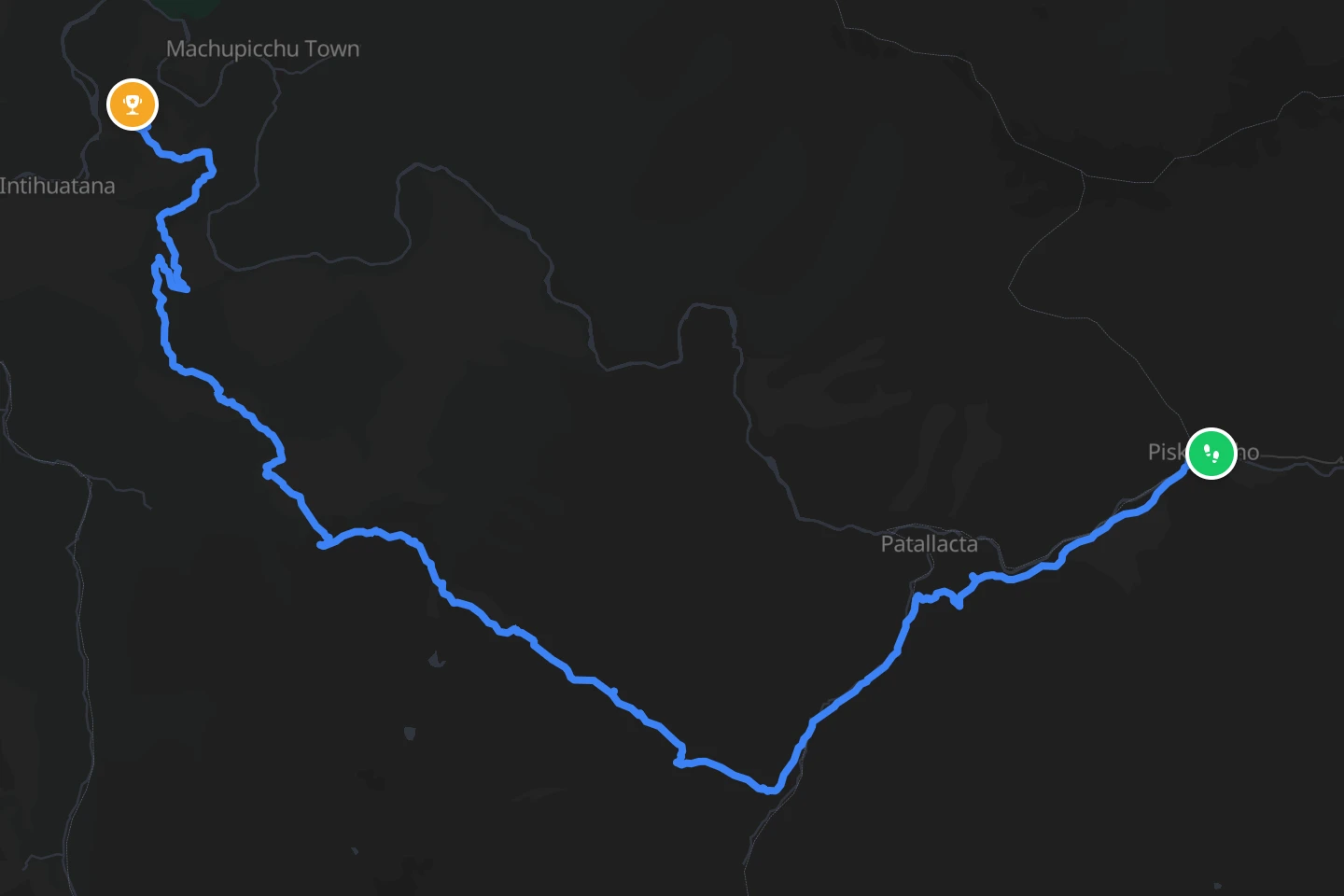
The classic Inca Trail is about 43 km (26 miles) from Km 82 on the Urubamba River to Machu Picchu, walked in four days and three nights. That is not far for four days. The distance is short because the trail is steep, high and stone-paved, and because the itinerary is fixed by the permit system: everyone camps at the same designated sites, so the days are set at roughly 12, 11, 16 and 5 km (7, 7, 10 and 3 miles). The last morning is a pre-dawn walk to Inti Punku, the Sun Gate, for the first view of the ruins.
The trail itself, without the campsite detours, is what reTrek measures: 36 km (22 miles) along the old road to the Sun Gate and down into Machu Picchu.
How high does it go?
The trail starts at about 2,680 m (8,790 ft) and crosses three passes. The first and highest is Warmiwañusca, Dead Woman’s Pass, at 4,215 m (13,830 ft) on day two, a climb of about 1,200 m (3,900 ft) in a morning. Machu Picchu itself sits lower, at about 2,430 m (7,970 ft), so the last day and a half are mostly downhill on Inca steps, which many people find harder on the legs than the climb.
How hard is it?
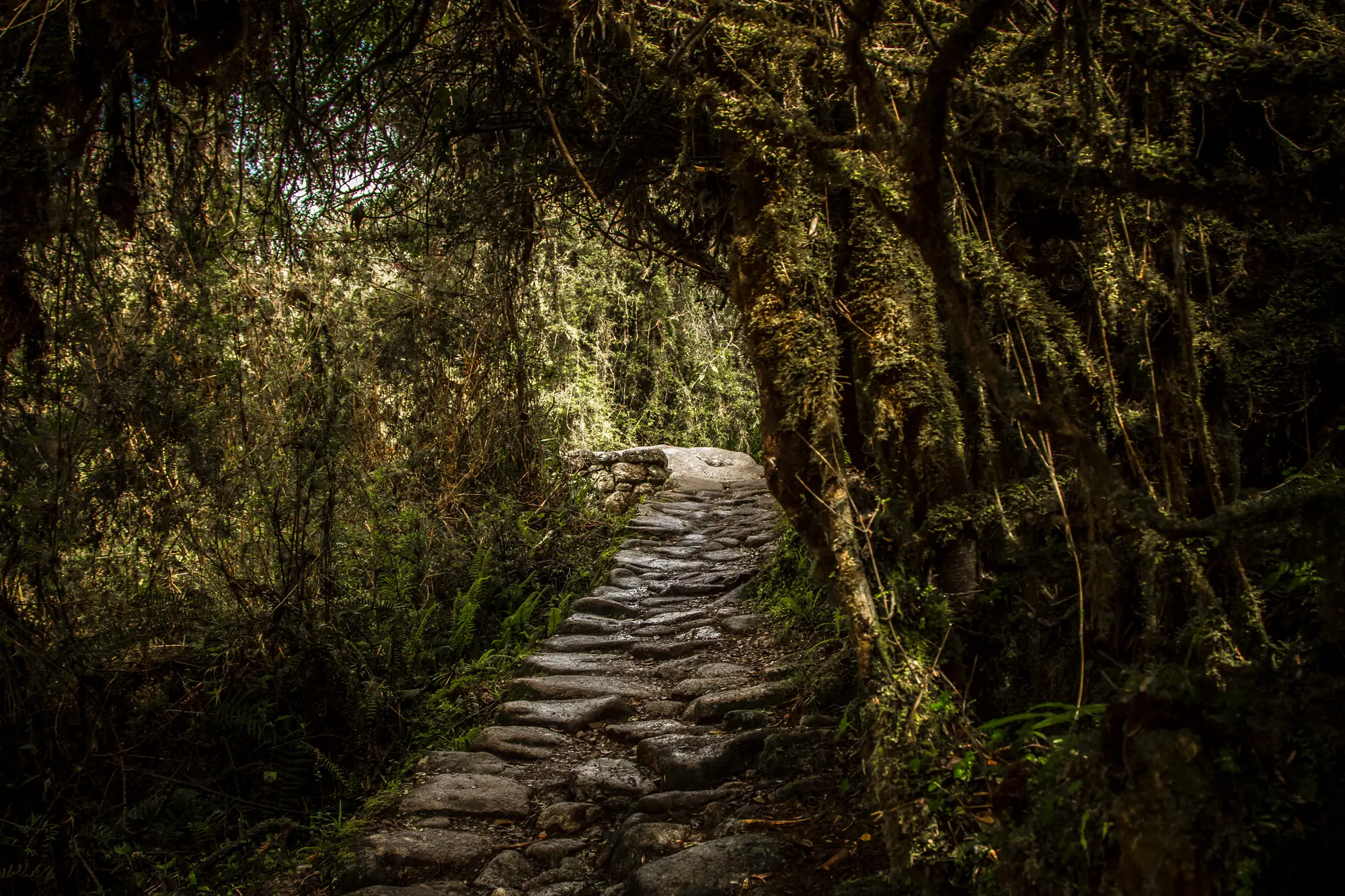
Two things make it hard. The altitude, since Dead Woman’s Pass is high enough for altitude sickness and most operators ask you to spend two days in Cusco, at 3,400 m (11,150 ft), before you start. And the steps: long stretches of the trail are original Inca stonework, steep and uneven, wet in the rainy months. The walking days are not long, but they are all up or all down.
It cannot be walked independently. Peru limits the trail to 500 people a day, and that figure includes guides, porters and cooks, so only about 200 trekkers start each day. A licensed operator and a named permit are required, permits for the dry season sell out months ahead, and the trail closes every February for maintenance.
The steps and the altitude are the hard part. Walked at home, the Inca Trail keeps the distance and the places and leaves the thin air at 4,215 m (13,830 ft) out. Walk the Inca Trail in reTrek.
When is the best time to go?
The dry season, May to September. Clear skies, cold nights, and the busiest permits. April and October are the shoulder months, greener and wetter but quieter. November to March is the rainy season, with slippery stone and cloud on the passes, and the trail is closed in February.
How do you get there?
Fly to Cusco, spend two days getting used to the altitude, then your operator drives you to Km 82, the trailhead named for its distance along the railway from Cusco. The trail ends at Machu Picchu, where a bus runs down to Aguas Calientes and the train back towards Cusco.
On the trail
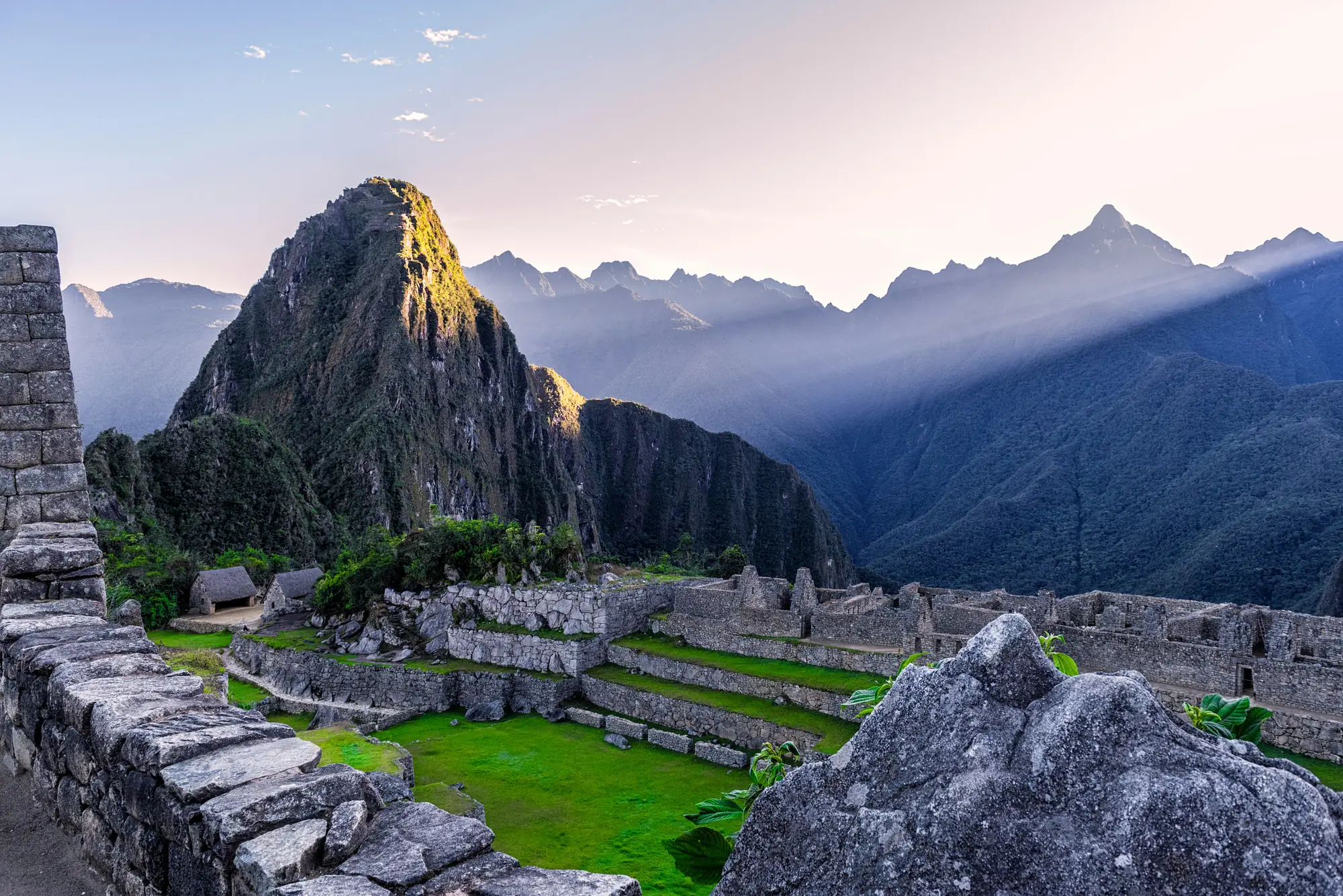
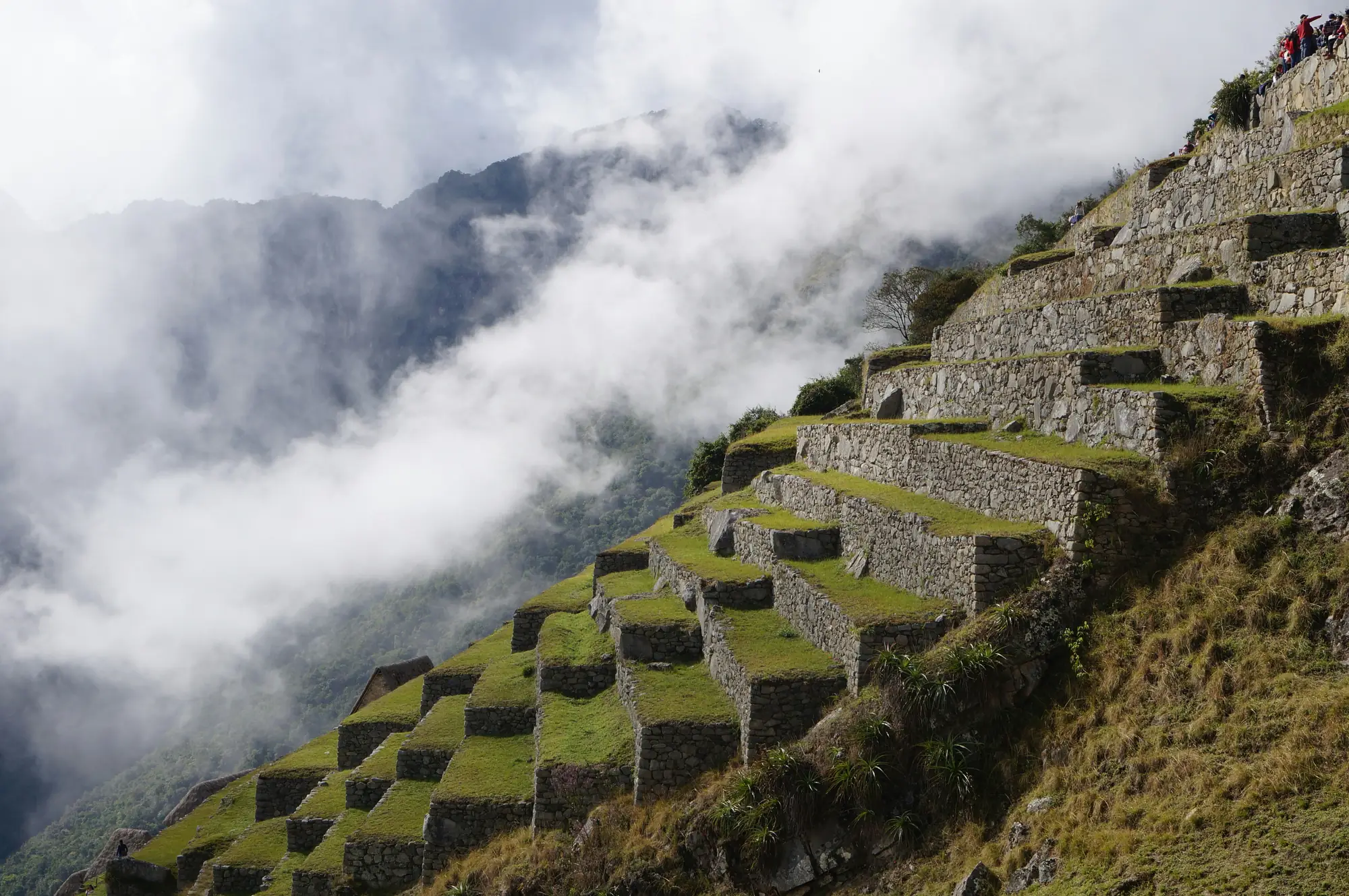
Some of what the trail passes.
Not this year? Walk it anyway, on your terms
Most people who read this far will never book the permit, the guide and the four days of stone stairs at altitude. reTrek lets you walk the same 36 km anyway.
Your everyday walks move you along the old road, and at points along the way a short film shows you where you have got to. For most people it takes about a week.
Walk it alone, pool your steps with friends, or race them to the Sun Gate.
The Inca Trail is a paid route. A year of reTrek costs about the same as one takeaway coffee a month, and Everest Base Camp is free if you want to try it first.
More about this route
Other routes
Sources: Historic Sanctuary of Machu Picchu, UNESCO · Inca Trail to Machu Picchu, Wikipedia · Classic Inca Trail guide, Machu Picchu Trek