
Mount Kilimanjaro, Machame route: how long it takes, how high it goes, and how to walk it from home
Six or seven days from rainforest to glacier, up the highest mountain in Africa and down the other side. The mountain is not steep. It is high.
At a glance
- Distance
- 62 km · 39 miles
- In steps
- about 89,000
- Trekking days
- 6 to 7 days
- Route
- Machame Gate to Mweka Gate
- Highest point
- 5,895 m · 19,341 ft
- Best season
- January to February, and June to October
How long does it take to climb Kilimanjaro?
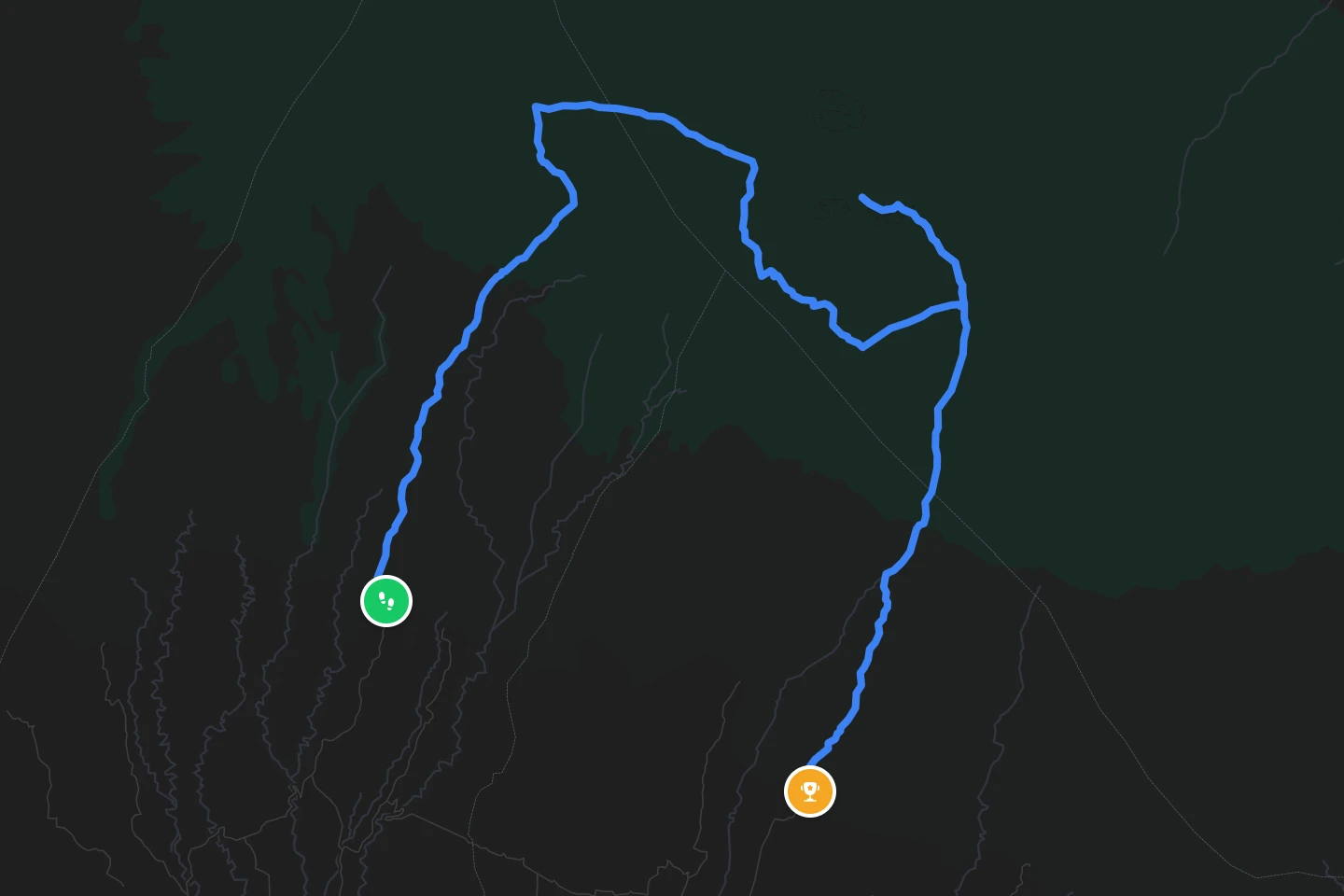
Six or seven days on the Machame route, one of the two most popular ways up the mountain, with Marangu. Gate to gate it is about 62 km (38 miles): up the south-western slope from Machame Gate, around the Shira plateau and the southern flank, up to Uhuru Peak, and down the Mweka route on the other side. The distance is short for a week because the days are short on purpose. The route climbs about 4,250 m (13,900 ft) from the gate to the summit, and the body needs each day at altitude to keep going. The seven-day version adds a rest day and roughly 85 percent of climbers who take it reach the top. On six days it is closer to 75 percent.
The trail itself, without the acclimatisation walks, is what reTrek measures: 58.5 km (36 miles), about 38.5 km (24 miles) up and 20 km (12 miles) down.
How high is Kilimanjaro?
Uhuru Peak, the summit, is 5,895 m (19,341 ft), the highest point in Africa and one of the Seven Summits. The route starts at Machame Gate at about 1,640 m (5,380 ft) in the rainforest, and summit night begins from Barafu Camp at about 4,670 m (15,320 ft), leaving around midnight to reach the crater rim at dawn. No other walk on Earth takes you from tropical forest to arctic ice in a week.
How hard is it?
The walking is not technical. Machame is a path, steep in places, with one short scramble on the Barranco Wall that needs hands but no rope. What makes it hard is the altitude and the summit night: six to eight hours of climbing in the dark and the cold, at an altitude where every step is an effort, followed by a long descent the same day. Guides follow the same rule doctors do: above 3,000 m (9,800 ft), gain no more than about 500 m (1,600 ft) of sleeping altitude a day and take a rest day every few days. “Pole pole”, slowly slowly, is the phrase you hear all week.
Climbing independently is not allowed. Every climber goes with a licensed operator, guides and porters, and park fees alone come to around 1,000 US dollars for a seven-day climb before the operator’s own price.
The altitude and the summit night are the hard part. Walked at home, Kilimanjaro keeps the distance and the places and leaves the thin air out. Walk Kilimanjaro in reTrek.
When is the best time to go?
The two dry seasons. January to early March is warm and clear. June to October is the busiest, cooler and with the most reliable weather. The long rains of April and May and the short rains of November make the lower forest wet and the summit snowier, and most operators avoid them.
How do you get there?
Fly to Kilimanjaro International Airport, between Arusha and Moshi, where the operators are based. Machame Gate is about an hour’s drive from Moshi. The park fee and permits are handled by the operator.
On the trail
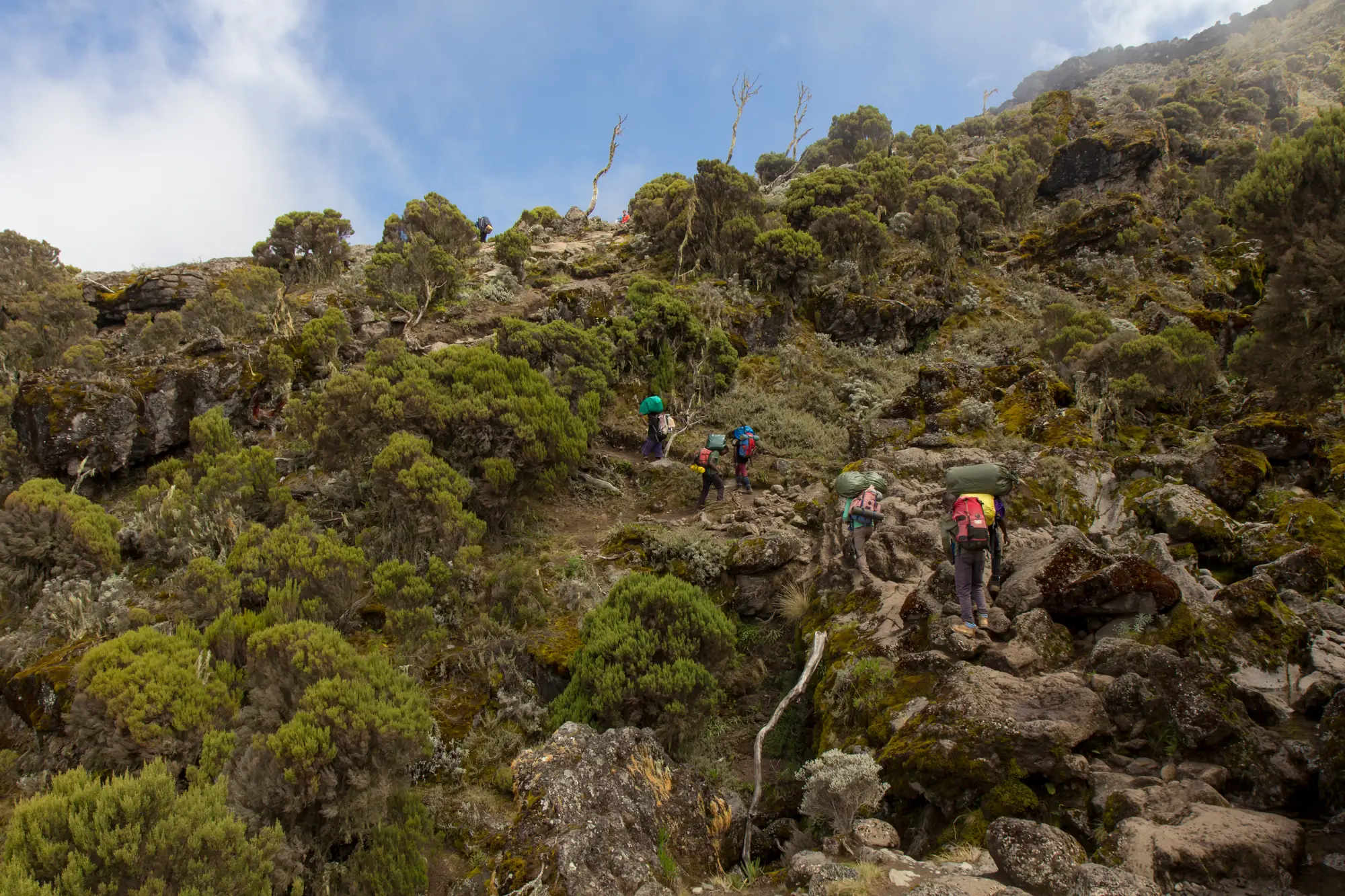
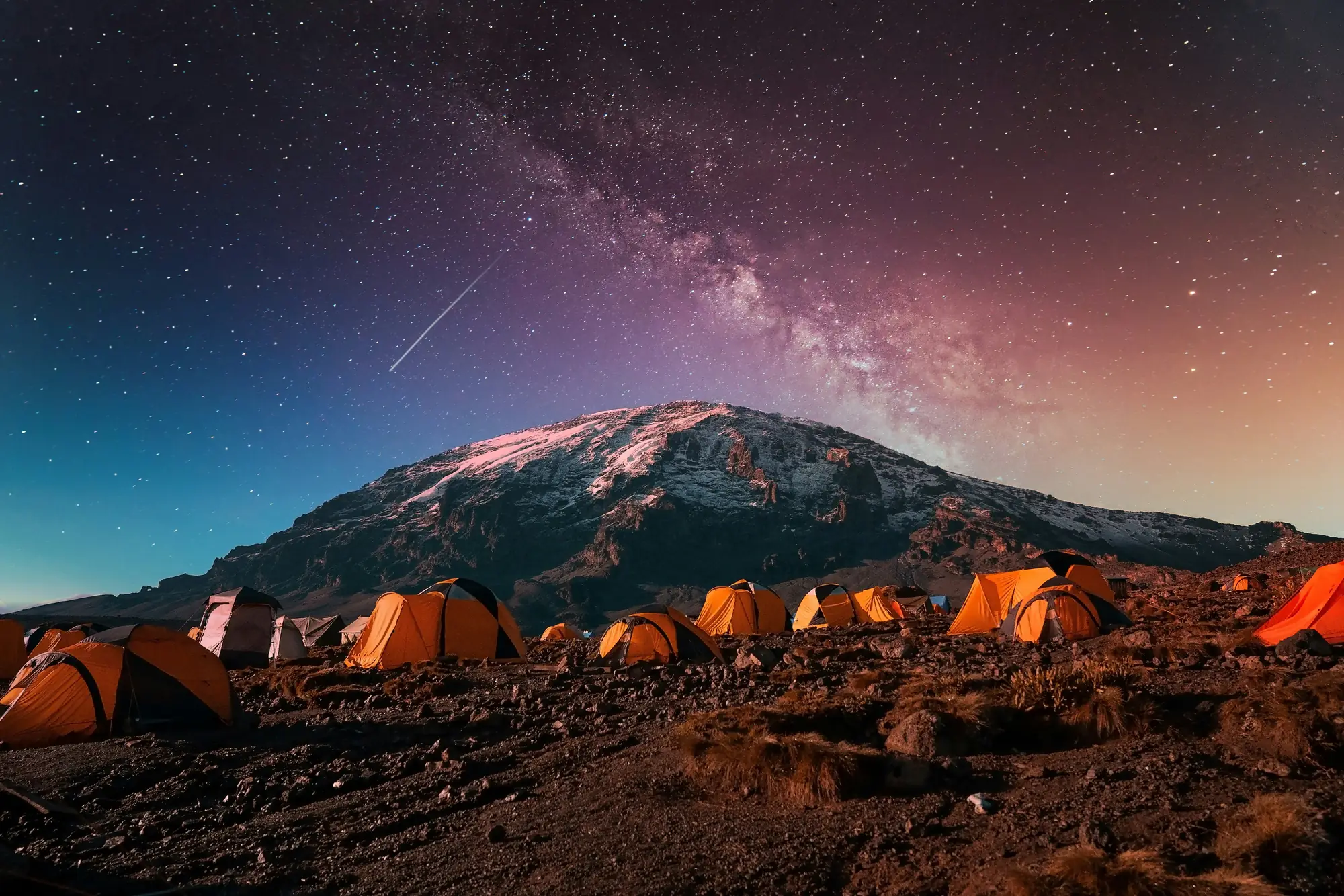
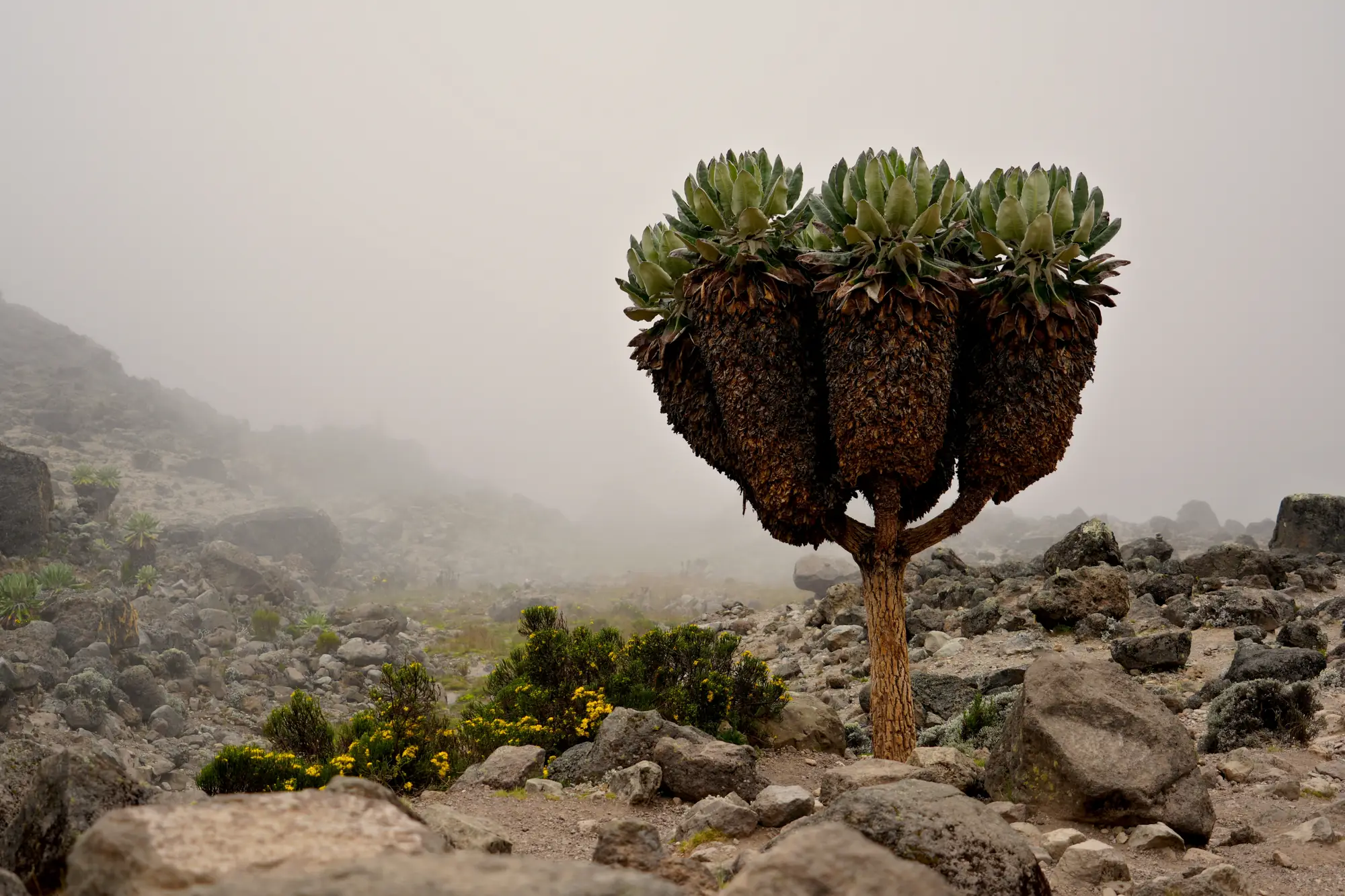
Some of what the trail passes.
Not this year? Walk it anyway, on your terms
Most people who read this far will never book the flight. A week off work, a summit night below freezing, a few thousand dollars. reTrek lets you walk the same 58.5 km anyway.
Your everyday walks move you up the mountain, and at points along the way a short film shows you where you have got to. For most people it takes a couple of weeks.
Walk it alone, pool your steps with friends, or race them to the summit.
Kilimanjaro is a paid route. A year of reTrek costs about the same as one takeaway coffee a month, and Everest Base Camp is free if you want to try it first.
More about this route
Other routes
Sources: Kilimanjaro National Park, UNESCO · Machame route, Wikipedia · Kilimanjaro park fees in 2026, Altezza Travel · Wilderness Medical Society altitude illness guidelines, 2024