
The Marathon: how far it is, where the distance comes from, and how to walk it from home
Forty-two kilometres from the battlefield at Marathon to the marble stadium in Athens, the road the whole distance is named after.
At a glance
- Distance
- 42.2 km · 26.2 miles
- In steps
- about 60,000
- Trekking days
- 8 to 9 hours on foot, one long day
- Route
- The Plain of Marathon to Panathenaic Stadium, Athens
- Highest point
- 248 m · 814 ft
- Best season
- Spring and autumn. The race is in November
How far is a marathon?
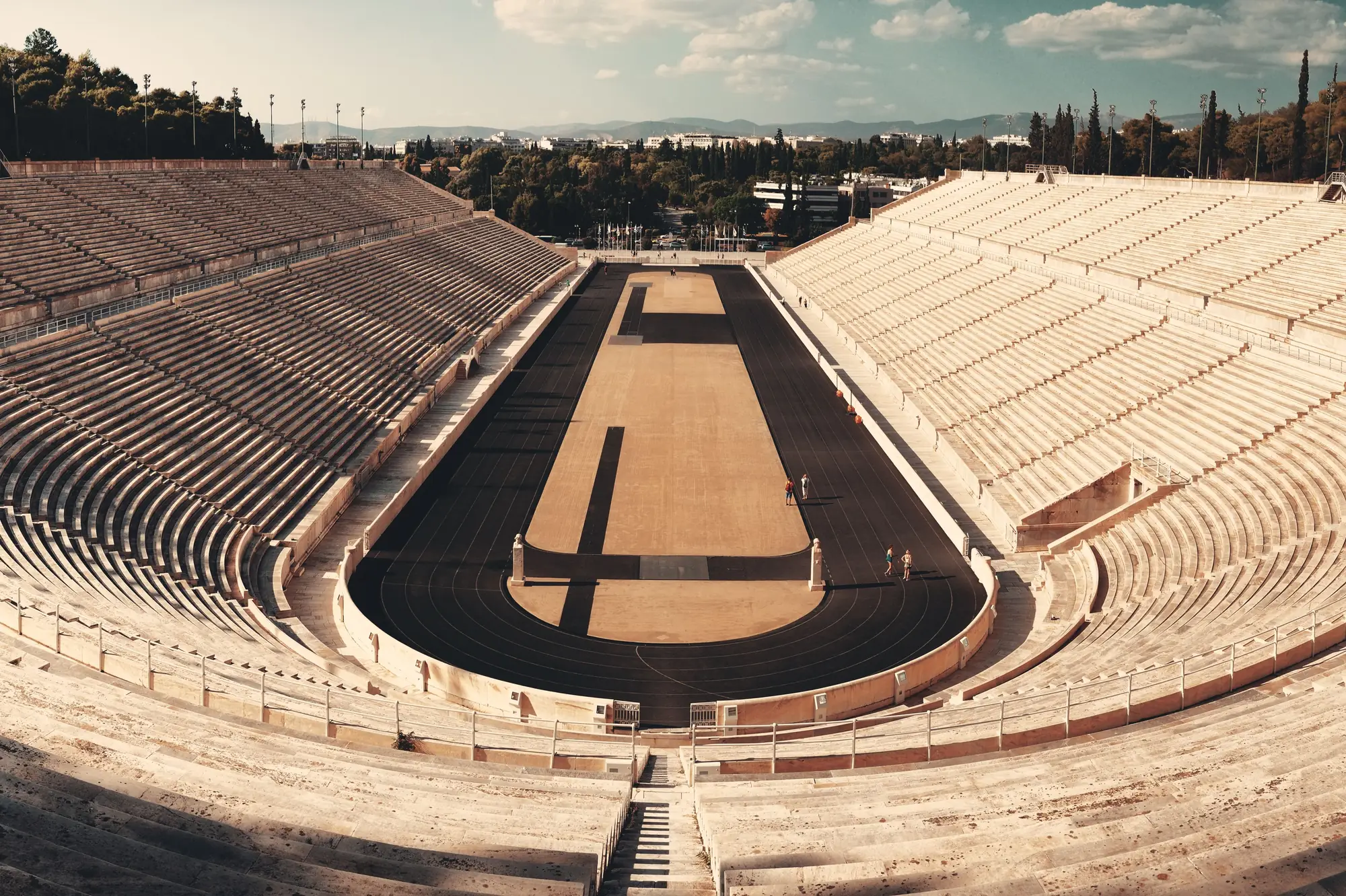
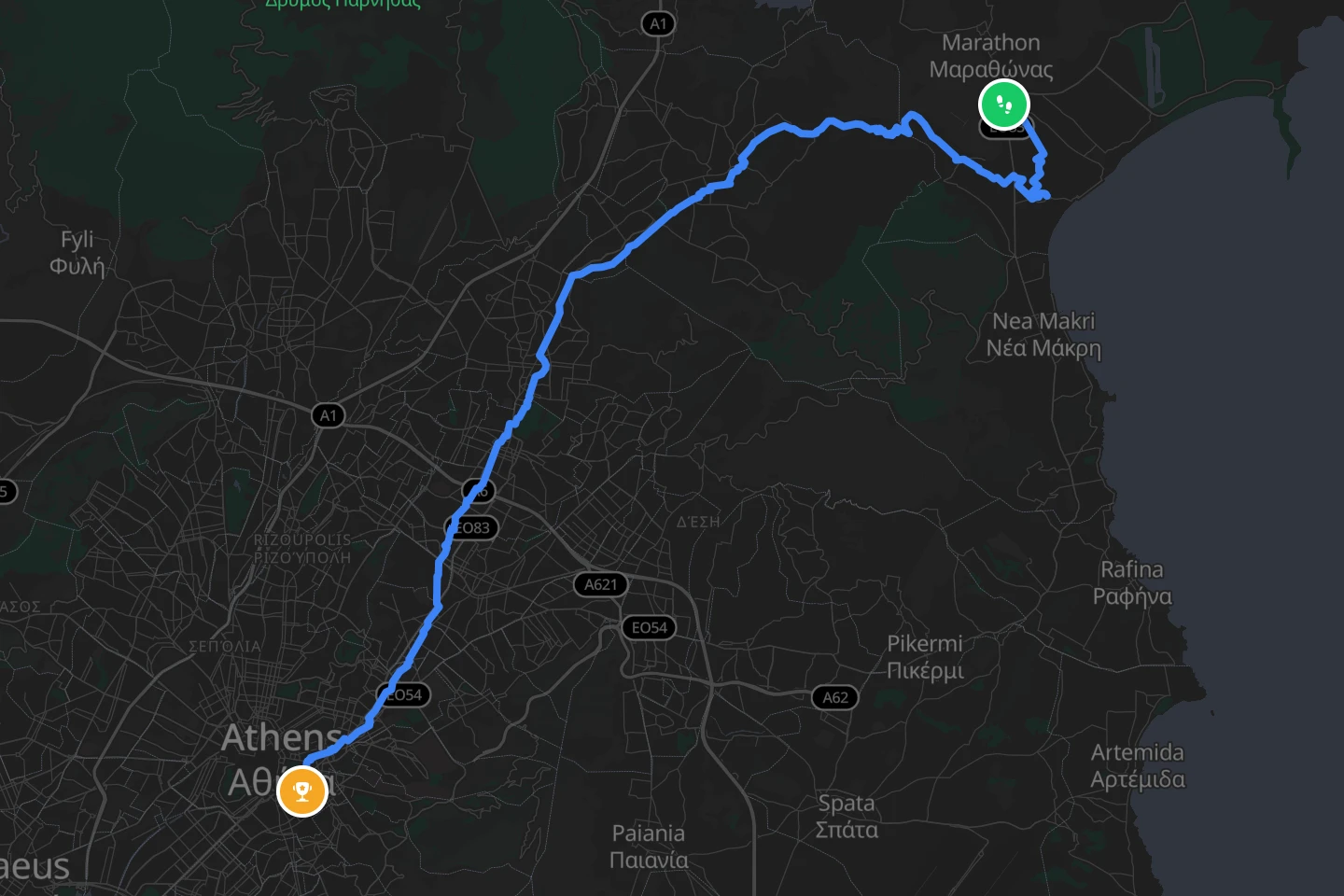
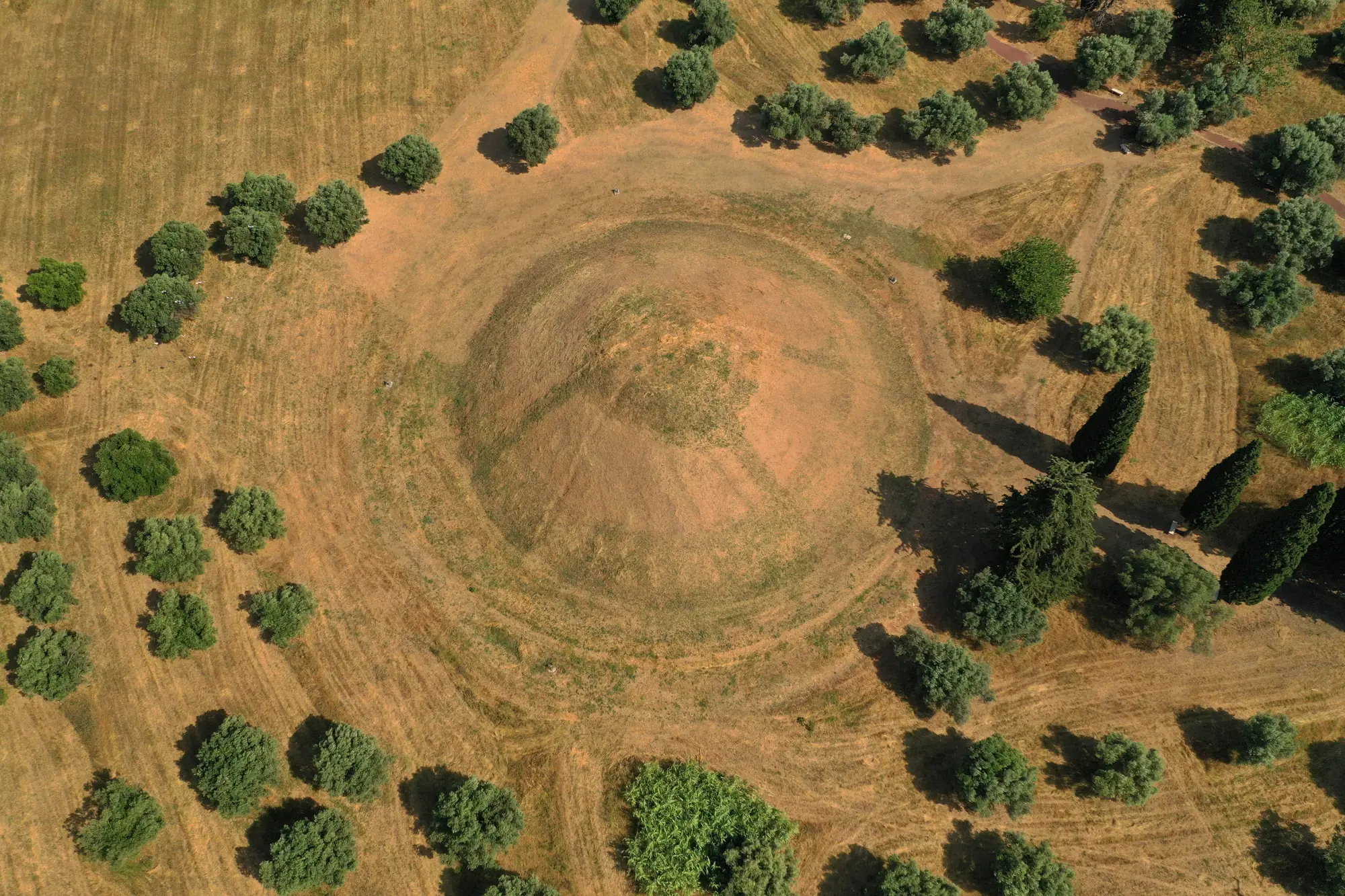
Exactly 42.195 km, 26 miles 385 yards, and the original one runs from the town of Marathon to the Panathenaic Stadium in the middle of Athens. The distance comes from the legend of Pheidippides, the messenger who in 490 BCE ran from the battlefield to Athens with news of the victory over the Persians, and from the 1896 Olympic race that revived it on this road. The odd exact figure was fixed in London in 1908 and adopted for good in 1921. The road itself is a little over 40 km (25 miles) and the course adds a loop past the burial mound of the fallen to make up the distance.
That course is what reTrek measures: 42.195 km (26.2 miles), from the plain to the marble track.
How hilly is it?
Hillier than any big-city marathon. The first 12 km (7.5 miles) along the coast are flat. From about 10 km to 31 km (6 to 19 miles) the road climbs almost without a break through the hills north-east of Athens, gaining around 380 m (1,250 ft) to a high point of about 248 m (814 ft). The last 11 km (7 miles) run downhill into the city, which sounds like a relief and feels like anything but on tired legs, until the final 150 m (500 ft) on the track of the marble stadium that hosted the first modern Olympics.
How hard is it?
To run, it is one of the slowest marathon courses in the world because of that climb. To walk, it is a long day: at an ordinary 5 km (3 miles) an hour the distance takes eight to nine hours without stops, which is why most walkers split it over two. The road is asphalt all the way and open to traffic outside race day, so walking it in one go is best done in the early morning, in the cooler months, and with the November race as the obvious occasion: the Athens Marathon keeps its course open long enough for walkers to finish.
One long day on asphalt, or a fortnight of everyday walks. reTrek measures the same road either way. Walk the Marathon in reTrek.
When is the best time to go?
Spring and autumn. The race is held in November, when the Attic weather is mild. July and August are too hot for a day on an open road, and the sea breeze along the first stretch does not reach the hills.
How do you get there?
Marathon is about 40 km (25 miles) north-east of Athens by road, reached by bus from the city, and the course ends in the centre, a short walk from the Acropolis. No permit is needed to walk the road. On race day you need a bib.
On the trail
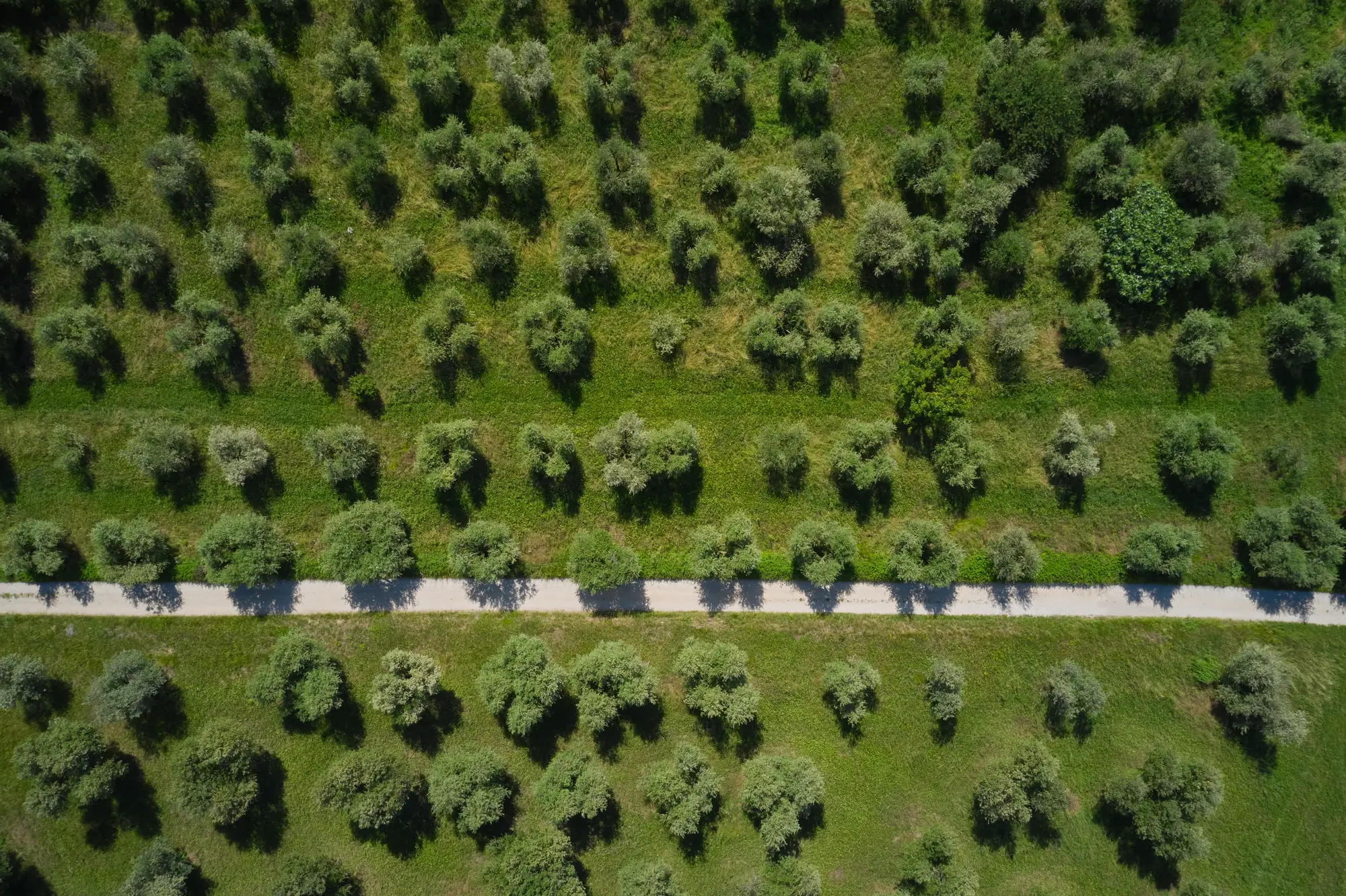
Some of what the trail passes.

Not this year? Walk it anyway, on your terms
Most people who read this far will never run one. reTrek lets you walk it instead, all 42.195 km, from the plain of Marathon to the stadium in Athens, at whatever pace your days allow.
Your everyday walks move you along the course, and at points along the way a short film shows you where you have got to. For most people it takes a week or so.
Walk it alone, pool your steps with friends, or race them to the stadium.
The Marathon is a paid route. A year of reTrek costs about the same as one takeaway coffee a month, and Everest Base Camp is free if you want to try it first.
More about this route
Other routes
Sources: Athens Marathon, the Authentic, official site · Athens Marathon elevation, Travelling Fit · How long does it take to walk a marathon, Marathon Handbook